

Franz Hedrich
Franz Hedrich was a German-Bohemian author and ghostwriter to Alfred Meissner.

Alexander James Adie was one of Edinburgh’s greatest scientific instrument makers. Inventor of the sympiesometer and optician to royalty, his precision instruments were used by Charles Darwin, Sir David Brewster and other leading nineteenth-century scientists.

Built between 1938 and 1940 for Caledonian Insurance, the largest insurance company at the time, the Capital Building was designed by architects Leslie Grahame Thomson and Frank J Connell.

In October 1848, the celebrated Polish composer Frédéric Chopin visited Edinburgh during his final concert tour. Discover where he stayed, where he performed, and why his brief Scottish visit remains an important chapter in the city’s musical history.
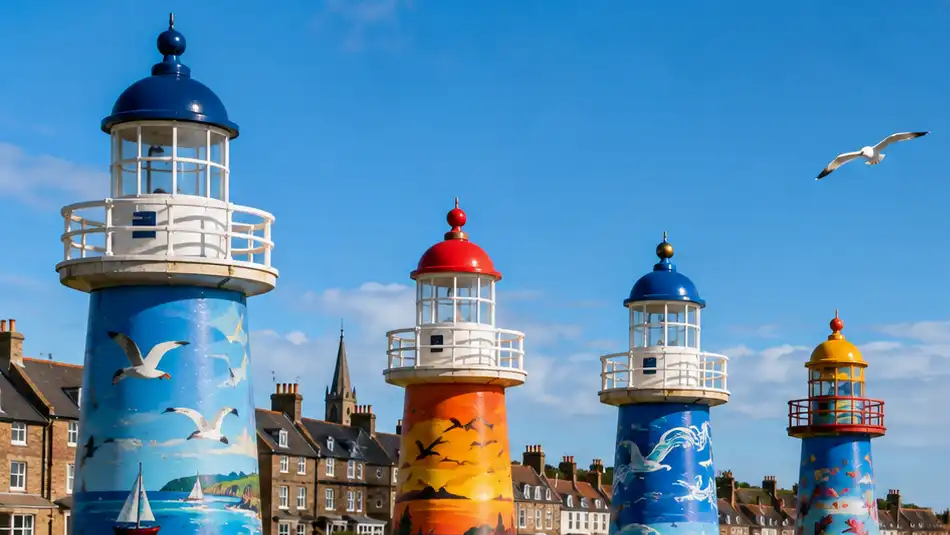
The Leuchie Lighthouse Trail has transformed North Berwick into an open-air gallery, with 15 colourful lighthouse sculptures creating a free family attraction while raising funds for the Leuchie charity.
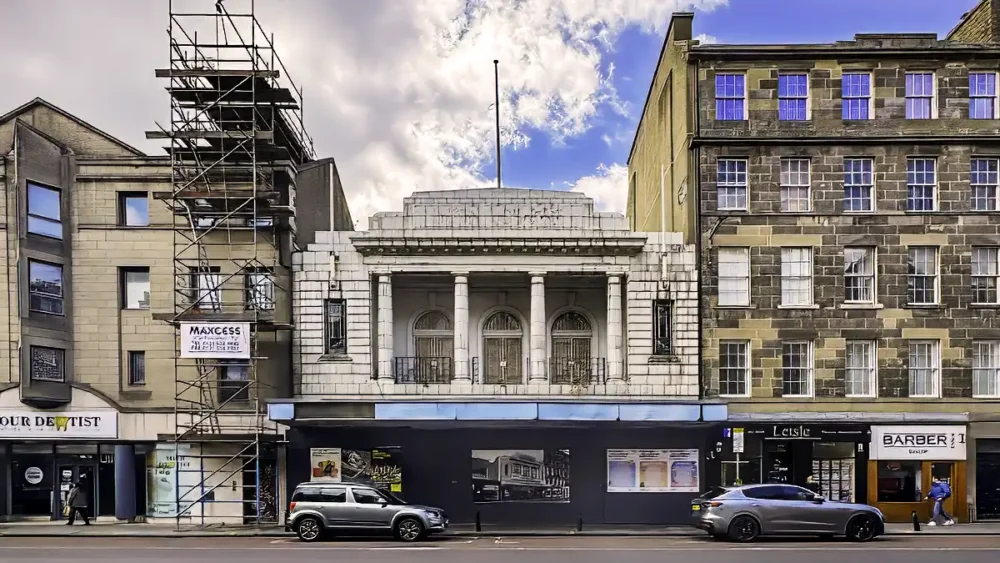
Sad to see this fine Edinburgh building lying empty. The old Odeon Cinema on the Southside of the city has been unused and unloved for more than twenty years.

1917 – the first World War raged on and the N.H.S. was almost thirty years away.
The charity running the Royal Infirmary had a deficit of almost £26,000; equivalent to £2.6M in 2024.

Coastal Command was founded in 1936, when the RAF was reorganised into Bomber, Fighter, and Coastal Commands, and played a vital role during World War II.

Bearing the simple message “Good Old Portobello”, this delightful 1903 postcard captures an unremarkable but memorable moment in everyday life. A local policeman appears to be having a quiet word with a young boy while several companions watch with interest, preserving a fleeting glimpse of Edwardian Portobello.