
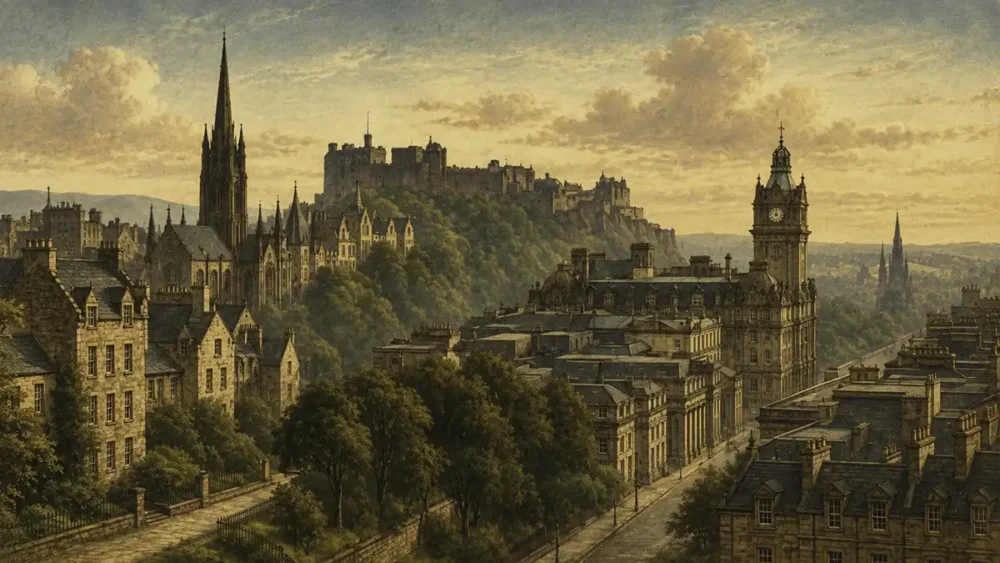
Edinburgh is unusual in having two very different historic areas sitting side by side.
In 1995, UNESCO recognised the importance of this by making Edinburgh’s Old Town and New Town a single World Heritage Site.
The two areas tell very different parts of the city’s story.
The Old Town grew up around Edinburgh Castle and the Royal Mile. Its layout is largely medieval, with narrow closes and wynds running off the main street and tall buildings packed into a relatively small area. Much of its character came from the limited amount of land available within the old city.
The New Town could hardly be more different. Developed from the late 18th century onwards, it was carefully planned with broad streets, squares, gardens and elegant Georgian buildings. Its development reflected Edinburgh’s growing wealth and importance during the Scottish Enlightenment.
The contrast between these two areas, and the fact that so much of both has survived, makes Edinburgh particularly important.
Why UNESCO Status Matters
World Heritage status is more than a title. It recognises that Edinburgh’s Old and New Towns are internationally important and worth protecting for future generations.
That does not mean preventing change. Edinburgh is a working city and has to adapt to modern needs. However, development within the World Heritage Site needs to take into account the area’s historic character.
Conservation is not simply about protecting individual old buildings. The layout of streets, traditional building materials, rooflines, important views and the overall character of neighbourhoods all matter.
This makes decisions about new buildings, alterations, and public spaces particularly important.
Tourism and the Pressure on the City
Tourism is a major part of Edinburgh’s economy, but the sheer number of visitors can also create problems, particularly during the summer and festival season.
The Old Town was never designed to cope with the number of people who now pass through its narrow streets. Heavy footfall strains public spaces and can make everyday life harder for residents.
There are other concerns too. The growth of short-term holiday lets has changed the character of some parts of central Edinburgh, while businesses aimed mainly at visitors can gradually replace shops and services used by local people.
The danger is not necessarily one dramatic change. It is the cumulative effect of many smaller changes over a long period.
Keeping Edinburgh a Living City
Protecting Edinburgh does not mean preserving it exactly as it was in the past. Cities have always changed, and Edinburgh is no exception.
Old buildings can be given new uses and new buildings can be added, provided they are well designed and take their surroundings into account. Good conservation should allow the city to develop without losing the features that make it distinctive.
Residents play an important role in this. The Old and New Towns are not museums. People live and work there, and maintaining homes, schools, shops, and local services helps keep Edinburgh’s centre a genuine community rather than simply a visitor attraction.
Looking After What We Have
Edinburgh’s Old and New Towns have survived remarkably well despite centuries of change. Their UNESCO World Heritage status recognises that this is something worth protecting.
The challenge is finding the right balance between conservation, development, tourism and the needs of the people who live in the city.
Edinburgh will continue to change, as it always has. The important thing is to make sure those changes do not gradually destroy the character and history that made the Old and New Towns internationally important in the first place.
Search